THE ARTIST / THE PROJECT
Who isSTRKLLR
Pronounced “Starkiller”BY CHRISTIAN KAI
STRKLLR (pronounced “Starkiller”) is a music and visual project by Christian Kai, built from a lifelong love of Halo, Star Wars, gaming, and cinematic storytelling. These songs live where absurdity meets attachment: ridiculous premises delivered with complete seriousness, characters defending their dignity, and stories that can make you laugh before they break your heart.
The story so far ↓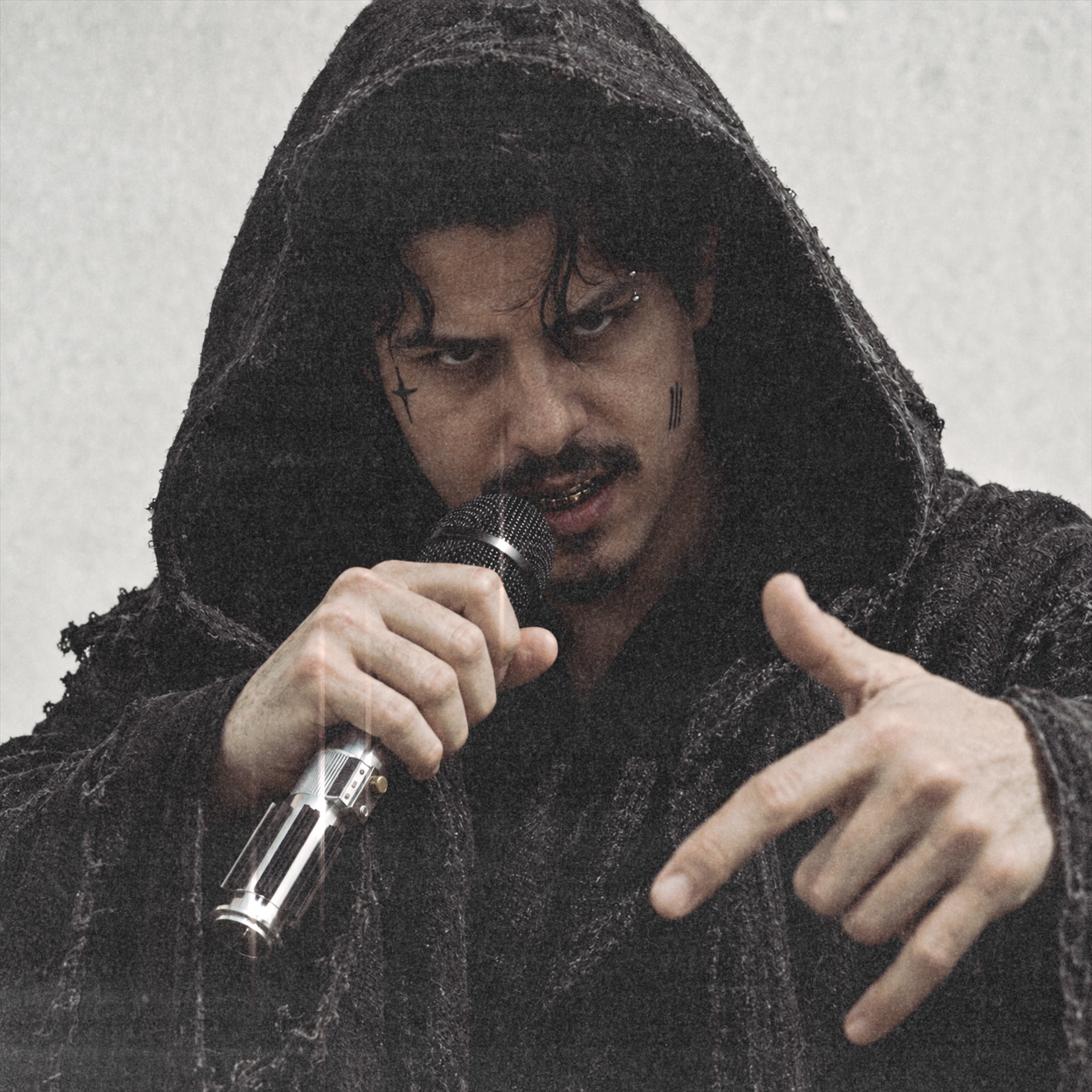
Before the songs had a voice.
Music has been part of my life for as long as I can remember. I spent nearly a decade as a first-chair violinist in an orchestra. Growing up in Hawaii, I played ukulele and later explored acoustic and electric guitar. But I never found confidence in my own voice. I wanted to sing and make music badly. I was too shy to let anyone hear it.
Over the years, I accumulated hundreds of unfinished songs and fragments in Apple Voice Memos. Sometimes I couldn’t bring myself to listen again. Lyrics stayed in the Notes app. The feeling was there, but I struggled to give it a finished form.
MY PROCESS / A LOOP, NOT A SHORTCUT
Working in reverse.
Get the idea into a complete draft while I can still hear it. Then work backward to understand it, rebuild it, and make it my own.
STRKLLR brings that material into the open. Some songs begin with new ideas; others return to writing and recordings from my childhood and adolescence. I revise, rewrite, and develop them, using AI-assisted writing and generated audio to explore structure, melody, delivery, and how the pieces of a song fit together. Working backward from something I can hear gives me something concrete to learn from and eventually perform myself.
SELECT A STAGE TO LOOK INSIDE ↓
Catch the feeling.
It starts with my writing, a voice memo, a memory, or a sound I can hear in my head. With ADHD, I need to capture it quickly; a complete song-shaped draft helps me remember both the sound and what I felt.
Listen again. Compare it with the original feeling. Return to whatever needs work.
The whole process, in words
- Catch the feeling. Start with my writing, recordings, and the sound I imagine; capture it before it slips away.
- Finish a draft. Use AI-assisted drafts to hear the whole song. I can make hundreds of generations, adjusting instrumentation, delivery, and lyric pronunciation to get closer to what I imagine.
- Find what needs fixing. Listen for bad artifacts, awkward lyrics, and choices that miss the feeling. Keep what works and revise what does not.
- Learn + perform. My goal is to learn the parts and tools I need, from guitar and drums to recording in a DAW, then bring in my own vocals and instrumentation.
- Rebuild the recording. Record, arrange, and edit those performances, using the draft as a reference while making decisions for the song I actually want.
- Mix, master, return. Shape the finished recording, listen again, and return to earlier steps as needed. This is the direction I am working toward; the current releases are part of that development.
THE AI DRAFT IS A BASIS TO WORK FROM. THE SONG I WANT TO MAKE IS THE GOAL.
Engrams.
A little fragment of this world.
I call the moments behind my work “engrams,” borrowing a word I encountered in Bungie’s science-fiction video game Destiny. For me, they are concentrated fragments of feeling: a sound, an image, a film scene, a memory, or a future life I imagined. Moments of frisson that stay with me long after they pass. Film and music are ways of letting someone else experience them.
Growing up autistic, I often felt isolated. I had few friends, and even around people I cared about, I struggled to communicate the intensity of what I felt and saw. Music reached that part of me. It changed my life and, at times, helped save it. Making it is a way of sharing feelings I couldn’t otherwise explain.
Making the process visible.
The current releases begin with my writing, artistic direction, and revisions, with AI assistance used to fill gaps and develop generated performances. For every song, I wrote most of the lyrics, including the chorus and bridge. Where a song draws on source material, I bring my own knowledge, check it through research, and use AI assistance to develop the remaining sections. Ultimately, every line will be pressure-tested, deliberately chosen, or rewritten until it expresses what I want the song to say. The artwork follows the same deliberate process: sketches, composition, typography, lighting references, and repeated decisions about what feels right. I want to make that process visible, including the versions I reject and the choices that bring the work closer to my vision.
Still becoming.
Consider this building in public; a beta version of a larger artistic project. My aim is to keep developing these songs through my own vocals, live instrumentation, and filmed music videos. AI-generated drafts can leave artifacts, awkward lyrics, and choices that do not match what I hear in my mind. Having a completed song gives me something concrete to return to, revise, and improve as I craft it toward that vision.
The technology is part of the process. The reason I’m doing it is the same reason I’ve always wanted to make art: to let someone else feel what I feel.
ENTER THE FIRST WORLD / SLIPSPACE
BLUE IN GREEN
A song about Chief, Cortana, closeness, and the goodbye.
FIND STRKLLR